


THE TEA CEREMONY IS THE HARDEST PART OF THE DAY TO PHOTOGRAPH. HERE'S WHY I LOVE IT.

Updated: 1 day ago
Get the kneeling shot. Get the tea. Get the envelopes. Move on to portraits.
I understand why. The room is small, the light is difficult, the family is moving constantly, and it's over before you've fully settled in. From a technical standpoint, it's genuinely hard.
But after years of shooting weddings in Saigon, the tea ceremony is the part of the day I look forward to most.

There's No Controlling It

At every other point in a wedding day, there's some degree of direction available. The tea ceremony has none of that.
The room fills up fast. Everyone finds their position without being told. The couple kneels, the tea is poured, things move — and no one is waiting for the photographer to be ready.
That loss of control is exactly what makes it interesting. When you can't arrange anything, you have to notice everything. You stop thinking about the frame and start thinking about the room — who's watching who, where the emotion is building, which corner has something happening that no one else has seen yet.
The Most Important Person in the Room Is Never the Couple
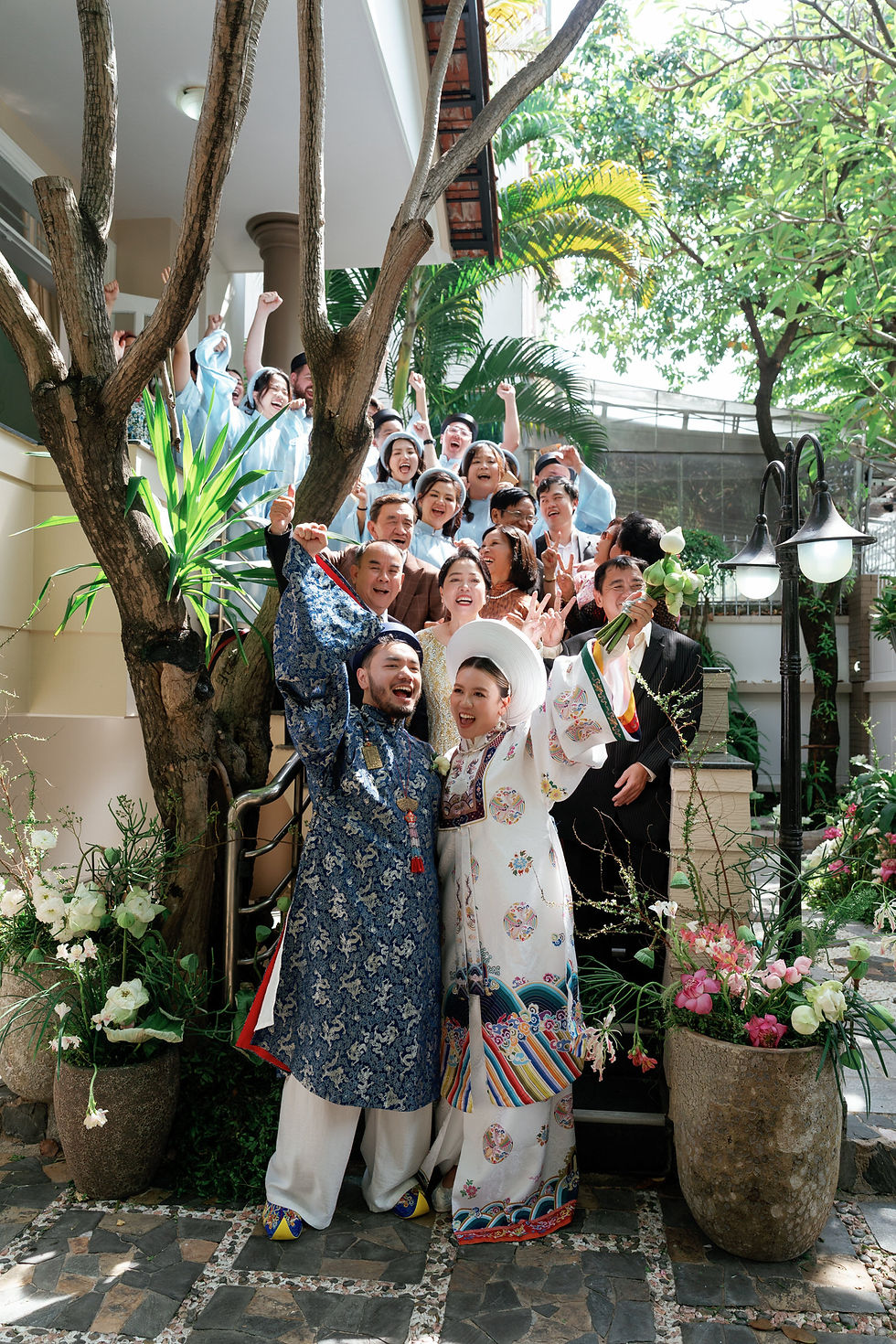


Everyone is watching the couple. The couple is watching the altar.
Which means almost no one is watching the grandmother.
She's seen what this love will become. She knows something the couple doesn't yet. And sometimes, in the middle of everything, she reaches out and adjusts a sleeve. Or simply looks. That small gesture — that quiet knowing — is the whole story.
I've learned to find that person in every tea ceremony. The one who isn't performing anything. The one who is just feeling it.
Those are the photos couples come back to years later and say: I forgot she was even in that frame.
It's Over Before You Expect It

Twenty minutes. Sometimes less.
There's no second take. The ceremony moves at the family's pace, not the photographer's. By the time you've noticed a moment, it's already gone — unless you were already there.
This is what documentary photography is actually about. Not reacting fast. Being in the right position before anything happens, because you've paid enough attention to know where the moments are going to come from.
What We Do Differently
Knowing how difficult this is, we've built a specific approach around it.
We arrive 90 minutes before the ceremony starts. Not just to set up — that takes 20 minutes. The rest of the time is for talking to people, learning the room, finding out who tends to get emotional, which family member has been holding everything together since morning. By the time the ceremony begins, we already know where to be.
Lighting is something we don't leave to chance either. Tea ceremony spaces are often dim — living rooms, family altars, spaces not designed for photography. We bring supplementary lighting calibrated for these environments: enough to make the space work for both the ceremony and the camera, without making it feel clinical.
And every photographer we send to a tea ceremony is in-house, with a minimum of two years of ceremony experience. Because shooting a tea ceremony isn't just a technical skill — it's a communication skill. You need to read the room, move through it without disrupting anything, and coordinate quietly when needed, all without breaking the emotional flow that makes the ceremony what it is.
The ceremony is short. The preparation is what makes it possible to do it well.
If you want to see what this looks like in practice, our galleries include full wedding stories shot from the tea ceremony through to the end of the evening.

If you're new to Vietnamese weddings, start with what happens at a Vietnamese tea ceremony. To see a few from start to finish: Thanh and Se Hoi, Alek and Thuc Anh, and Lisa and Carlos at The Anam Cam Ranh.


Comments